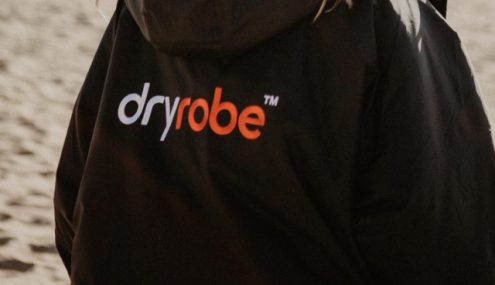
The DRYROBE Mark Is Not Generic!
Dryobe sues for trade mark infringement and passing off - succeeds at IPEC On 4...
Read more
Businesses frequently assume that adding a logo, stylised lettering or graphic element to descriptive wording will automatically make a trade mark registrable. In practice, however, the UK Intellectual Property Office (‘UKIPO’) applies strict criteria when assessing whether a figurative mark possesses the distinctive character required for registration.
Understanding what the UKIPO is likely to accept – and, equally importantly, what it is likely to refuse – can help businesses avoid unnecessary costs and delays during the application process.
A figurative trade mark is a mark that contains visual or graphical elements in addition to, or instead of, plain text. Figurative marks may include:
The key question is whether the mark enables consumers to identify the commercial origin of the relevant goods or services. In other words, does the sign function as a badge of origin distinguishing one undertaking from another?
If the answer is ‘no’, the UKIPO may refuse the application on the basis that the mark lacks distinctive character.
Distinctiveness lies at the core of trade mark protection. A mark must do more than simply decorate a product or describe its characteristics. It must create a clear and memorable commercial impression capable of identifying a particular source of goods or services.
A common misconception is that minor graphical additions are sufficient to convert descriptive wording into a registrable trade mark. In most cases, they are not.
Logos incorporating genuinely original graphic elements are generally more likely to satisfy the distinctiveness requirement.
Strong figurative marks often contain:
The more imaginative and unconventional the design, the greater the likelihood that the mark will be considered distinctive.
Even where the wording itself is descriptive or weak, sufficiently substantial stylisation may render the overall mark registrable.
However, the line in the sand is that the stylisation must materially alter the overall commercial impression of the sign. Simple font choices, capitalisation, bold text or basic decorative features will rarely be enough.
One of the most common grounds for refusal is descriptiveness.
A figurative mark is unlikely to be registrable where consumers would immediately (and without any further thought) perceive it as describing:
Absent additional distinguishing features, examples may include:


The addition of ordinary graphical elements such as borders, circles, standard icons or conventional fonts generally do not overcome the descriptive nature of the wording associated with them.
The UKIPO assesses the overall impression created by the mark. If the descriptive message remains dominant, refusal is likely.
Applicants often assume that presenting descriptive wording in logo format will automatically create a registrable trade mark. In practice, relatively minor design changes are rarely sufficient.
Examples that commonly fail include:
The UKIPO will assess whether the figurative elements create a distinctive overall impression independent of the descriptive wording itself. If they do not, the application is likely to face objection.
It is well established that a combination of individually non-distinctive elements does not automatically create a distinctive trade mark.
However, a mark may still be registrable where the presentation, composition and interaction of those elements produce an overall impression that is sufficiently removed from the descriptive meaning conveyed by the wording alone. In other words, the sum of the parts can sometimes be enough to cross the threshold of distinctiveness.
Accordingly, the assessment is always made by reference to the mark in its entirety, as the consumer would see it and think about it.
Before filing a figurative trade mark application with the UKIPO, businesses should consider the following:
Obtaining professional advice early on is always advisable. Any trade mark attorney with sufficient expertise can judge whether a mark may be sufficiently distinctive. That advice will often pay for itself because pursuing an unregistrable mark would mean a waste of money and time. Moreover, it would be extremely difficult (if not impossible) to stop another party using the same mark if that mark was not capable of being protected through registration.
Whilst figurative trade marks can sometimes overcome non-distinctiveness and descriptiveness objections (for example, where sufficient use has already been made of the mark such that it can be said to have acquired its own distinctive character in the marketplace) the default threshold for registrability before the UKIPO remains relatively high. Minor stylisation or ordinary graphic additions will rarely be enough.
Businesses seeking strong trade mark protection should ensure that any figurative mark contains genuinely distinctive visual features capable of functioning as a badge of origin in the minds of consumers.
If you are in this position and need professional expertise, talk to us.