Counterfeit Fashion: The Hidden Cost of Fake Designer Goods
The popularity of pre-loved fashion has made spotting fakes more important than ever. The second-hand...
Read more
Disputes over band names are nothing new. Think Frankie Goes to Hollywood and Bucks Fizz. When members leave, line-ups change and a group continues performing over several decades, working out who actually owns the rights in the name can become surprisingly complicated.
A recent High Court decision concerning THE COMMODORES, the band behind hits including Easy, Three Times a Lady and Nightshift, provides a good example. It also contains some useful lessons for businesses more generally about trade marks, unregistered rights and applications made in bad faith.
In Fifth Avenue Entertainment LLC v Commodore Entertainment Corporation [2026] EWHC 2730 (Ch), the High Court dismissed an appeal against an earlier UK Intellectual Property Office (UKIPO) decision which had prevented Fifth Avenue Entertainment LLC from registering THE COMMODORES as a UK trade mark.
The Commodores were formed in 1968 and became internationally successful during the 1970s and 1980s. Lionel Richie was perhaps the group’s best-known member, but the dispute centred on another former member, Thomas McClary.
McClary left the band in 1984. The Commodores nevertheless continued performing and recording without him and Commodore Entertainment Corporation continued operating the band’s musical business under THE COMMODORES name.
Many years later, from around 2014, McClary became involved with Fifth Avenue Entertainment, which conducted a musical business using names such as ‘THE COMMODORES featuring Thomas McClary’.
Fifth Avenue subsequently sought to secure trade mark protection for THE COMMODORES. Following the UK’s departure from the EU, it applied in 2021 to register the name as a UK trade mark.
Commodore Entertainment opposed the application.
There were two main arguments. First, it said it already had sufficient reputation and business attached to THE COMMODORES name in the UK to prevent Fifth Avenue from using the name under the common law right of ‘passing off’, which can protect a business name even where that name is not registered as a trade mark.
Secondly, it argued the application had been made in ‘bad faith’.
The UKIPO agreed on both points and refused the application. Fifth Avenue appealed to the High Court.
A significant part of the dispute concerned who owned the goodwill built up under THE COMMODORES name.
Goodwill, put simply, is the attractive force which brings customers to a business. It is the commercial value and reputation associated with the name rather than ownership of the name in the abstract.
The history was complicated by partnership agreements dating back to 1978 and 1984. Fifth Avenue sought to challenge whether Commodore Entertainment had acquired the goodwill connected with the name.
The High Court was not persuaded.
A particularly important fact was what had happened in practice. Commodore Entertainment had carried on the band’s musical business under THE COMMODORES name from 1984 onwards. McClary, meanwhile, had left the band and pursued a solo career.
The Court considered earlier case law dealing specifically with bands. This recognises an important principle: different groups can potentially generate separate goodwill in the same name at different times. Simply having been associated with a name in the past does not necessarily give someone permanent control over all future use of it.
The Court therefore upheld the finding that Commodore Entertainment had generated its own goodwill in THE COMMODORES name and had sufficient rights to oppose Fifth Avenue’s application.
There is an important wider point here. Being the creator, founder or former user of a name does not automatically mean you own the commercial goodwill associated with it indefinitely. Who has actually been trading under the name and how the public understands that use can be crucial.
The finding of bad faith is potentially even more interesting.
Bad faith does not simply mean someone has behaved dishonestly in the ordinary sense. The circumstances surrounding the filing of the application and, importantly, the applicant’s intentions must be considered.
Here, McClary had left The Commodores in 1984 and had not traded under that name for around 30 years. He knew the band had continued to perform under the name. There had also been substantial litigation in the United States over use of the name.
Against that background, the UKIPO had concluded there was an initial case of bad faith which Fifth Avenue needed to answer.
Fifth Avenue argued it had legitimate reasons for seeking registration, including McClary’s belief he had genuine rights in the name. However, the Hearing Officer concluded the application was intended to shut out Commodore Entertainment, which had been using the name for decades.
The High Court found no reason to interfere with that conclusion.
Applying for a trade mark with the intention of preventing someone else from using it is not automatically bad faith. That is one of the normal benefits of trade mark registration. Everything depends upon the circumstances and the applicant’s intentions.
The problem here was the history between the parties and the existing use of the name by Commodore Entertainment. Against that background, the attempt to secure exclusive UK rights could legitimately be viewed very differently.
Although the facts here concern a famous band name, there are some much broader lessons.
First, ownership of a registered trade mark and ownership of the underlying goodwill are not necessarily the same thing. It is possible to have valuable rights in a name even without a trade mark registration.
Secondly, historic associations with a brand do not necessarily provide a permanent entitlement to use or register it. This can be important where founders leave businesses, partnerships dissolve or businesses change hands.
Thirdly, putting ownership arrangements in writing at the outset can avoid substantial problems later. Agreements involving founders, partners or collaborators should deal expressly with ownership and future use of names, logos and other intellectual property, including what happens when somebody leaves.
The case also shows why the circumstances surrounding a trade mark application matter. An application should not simply be viewed as an administrative exercise. Where there is a history of competing claims to a name, the applicant’s intention in seeking exclusive rights may come under close scrutiny.
Finally, the case is a reminder to put the relevant evidence and arguments forward at the outset. Fifth Avenue attempted to develop some arguments on appeal concerning the effect of Alabama law and the historic agreements. The High Court made clear it was too late to introduce points which had not properly been raised and supported by evidence before the UKIPO.
The appeal was therefore dismissed and the refusal to register THE COMMODORES in the UK stands.
For businesses, the underlying message is fairly simple: registration is important, but the history behind a brand matters too. Establishing clearly who owns a brand, who can use it and what happens when people part company can prevent a dispute decades later.
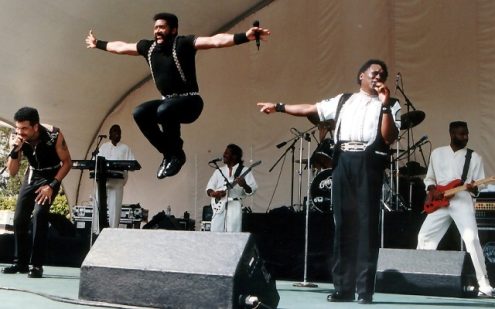
Image by Carl Lender of The Commodores performing at Gulfstream Park in Hallandale, FL (source: Wikimedia Commons)
Posted: 29th October 2026


The popularity of pre-loved fashion has made spotting fakes more important than ever. The second-hand...
Read more

English Whisky Now Has Protected Geographical Indication Status - What This Means English whisky has...
Read more